
the challenge
It wasn’t just about signposting or promoting an archaeological site.
The mission was bigger:
–
To create a visual identity with soul, capable of reflecting centuries of history through a contemporary lens;
–
To engage the local community, especially young people, in embracing and valuing the heritage;
–
To enhance the visitor experience through informative, visual, and playful materials;
–
To give the Mesas do Castelinho Archaeological Site a physical and digital presence, promoting it as a cultural and educational destination.
the process
Identity with Deep Roots
We started from a real object: a terracotta head from the Iron Age, discovered on the site itself. From there, we created a visual identity that respects its origins while looking to the future. We drew inspiration from archaeological elements, the human silhouettes found on site, the lines of the territory, and the layers of its historical chronology.


– Terracotta human head (Iron Age) combining Mediterranean influence, bald and beardless, with Celtic traits, round, frontal eyes and an almost absent nose.
The result? A logo that is not just visual, but narrative, symbolic, and deeply rooted in the site.

“Lizard-Man” Mascot – A Legend with a Face
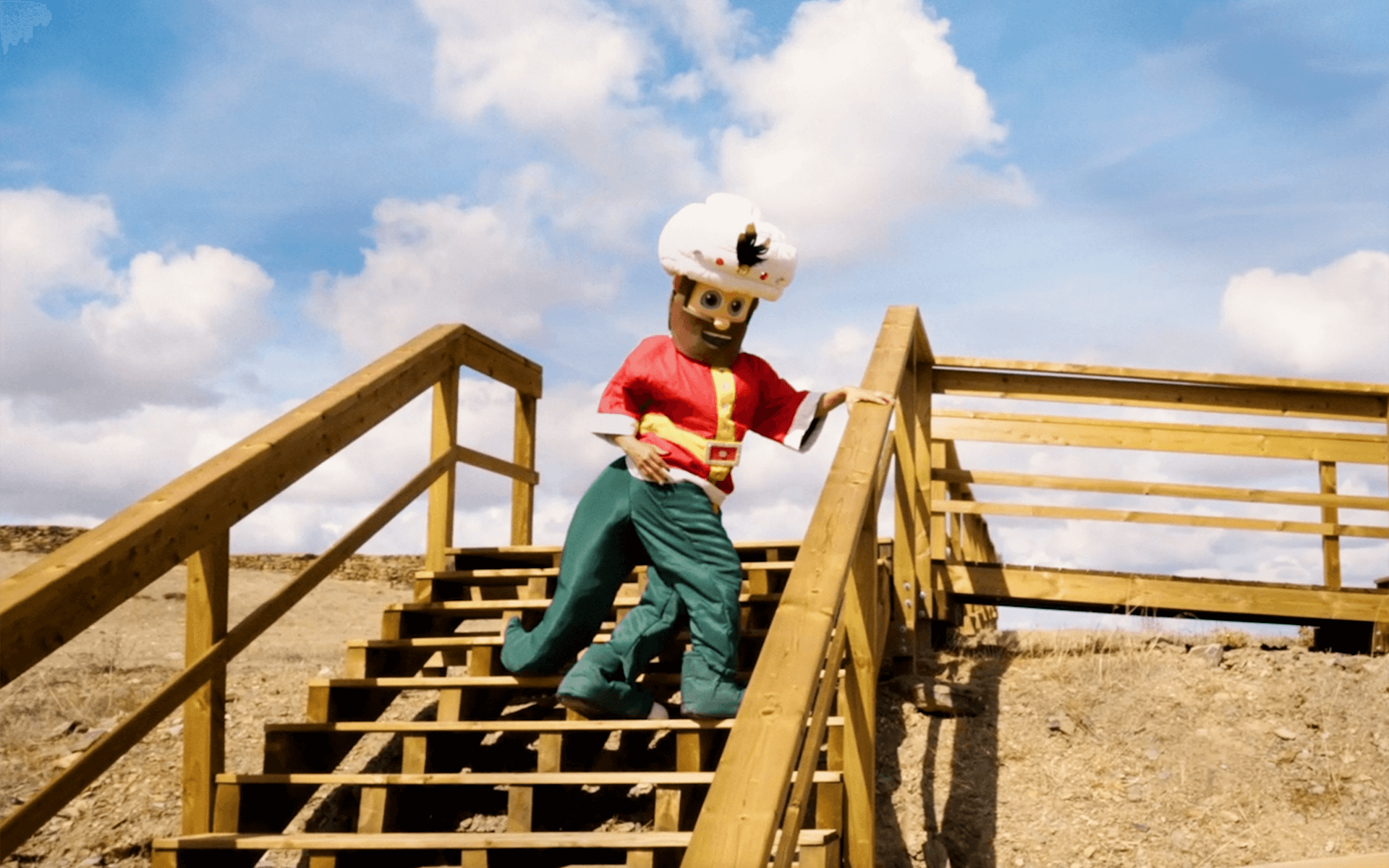
One of the most enigmatic figures in local tradition is the Lizard-Man, a mythical guardian of Castelinho. To bring it to life, we invited children from the region to draw their vision of this character. Their designs formed the basis for the creation of the official mascot: half man, half lizard, with richly detailed clothing and a scarf as a distinctive element.


– Graphic proposal of the “Lizard-Man”.
More than just a friendly figure, the mascot has become a link between history and imagination, bringing children closer to heritage in a playful and engaging way.

Signage
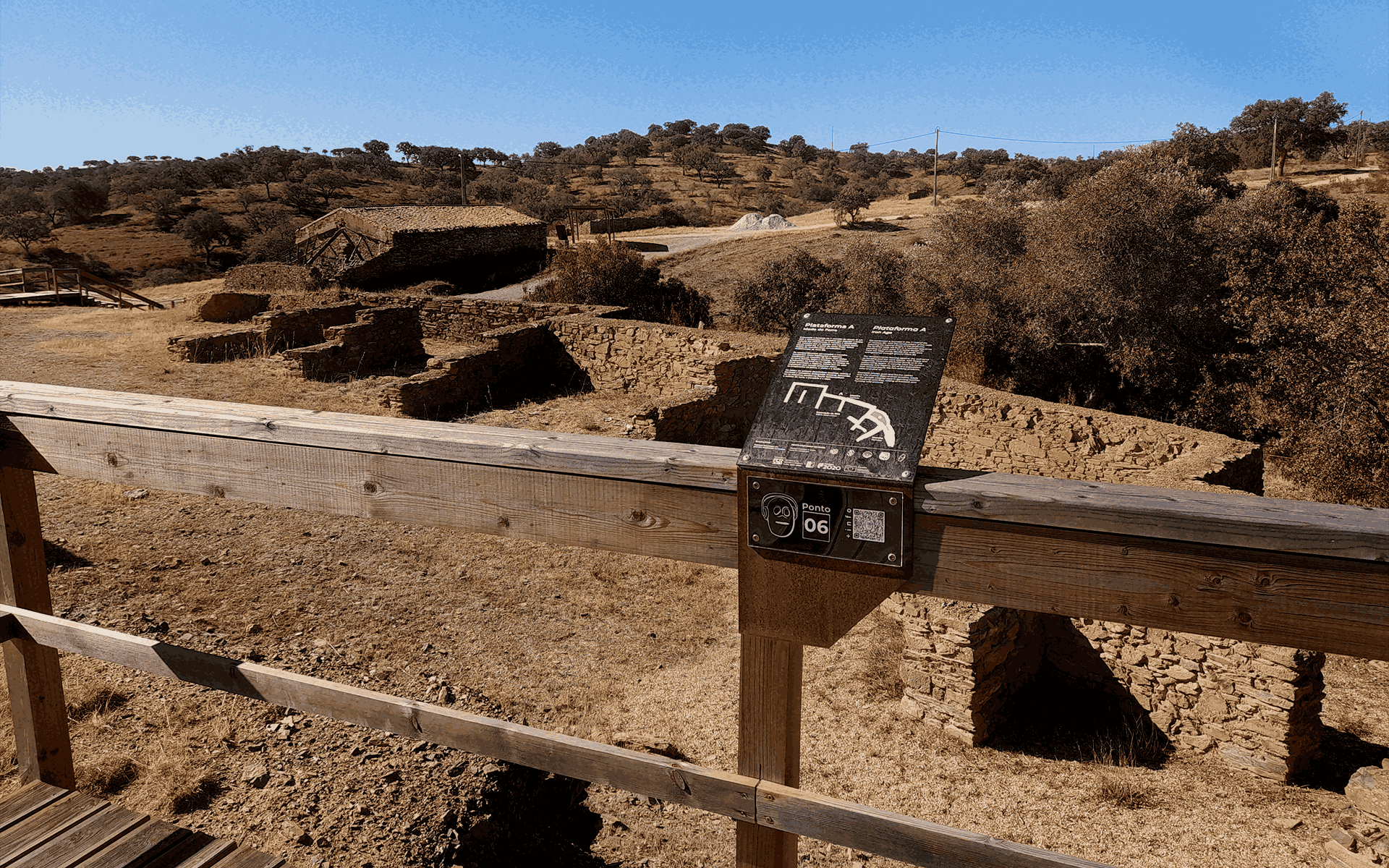
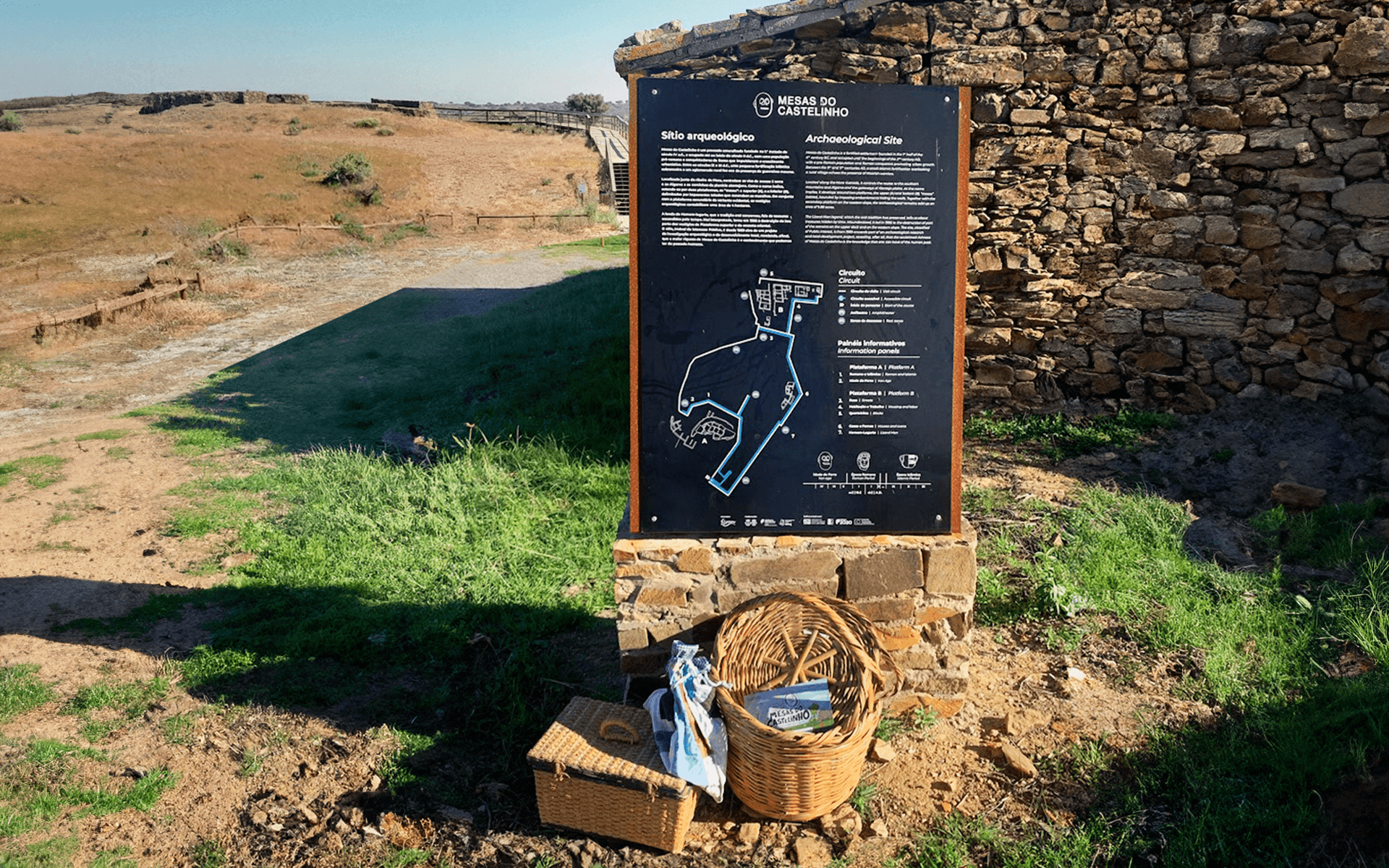
We created a complete system of directional signs and information panels, with attention to clarity, durability, and integration into the natural environment. The content was developed to balance archaeological accuracy with accessible language, making the visit more intuitive and enriching for diverse audiences.


– Information panel

Graphic and Editorial Materials
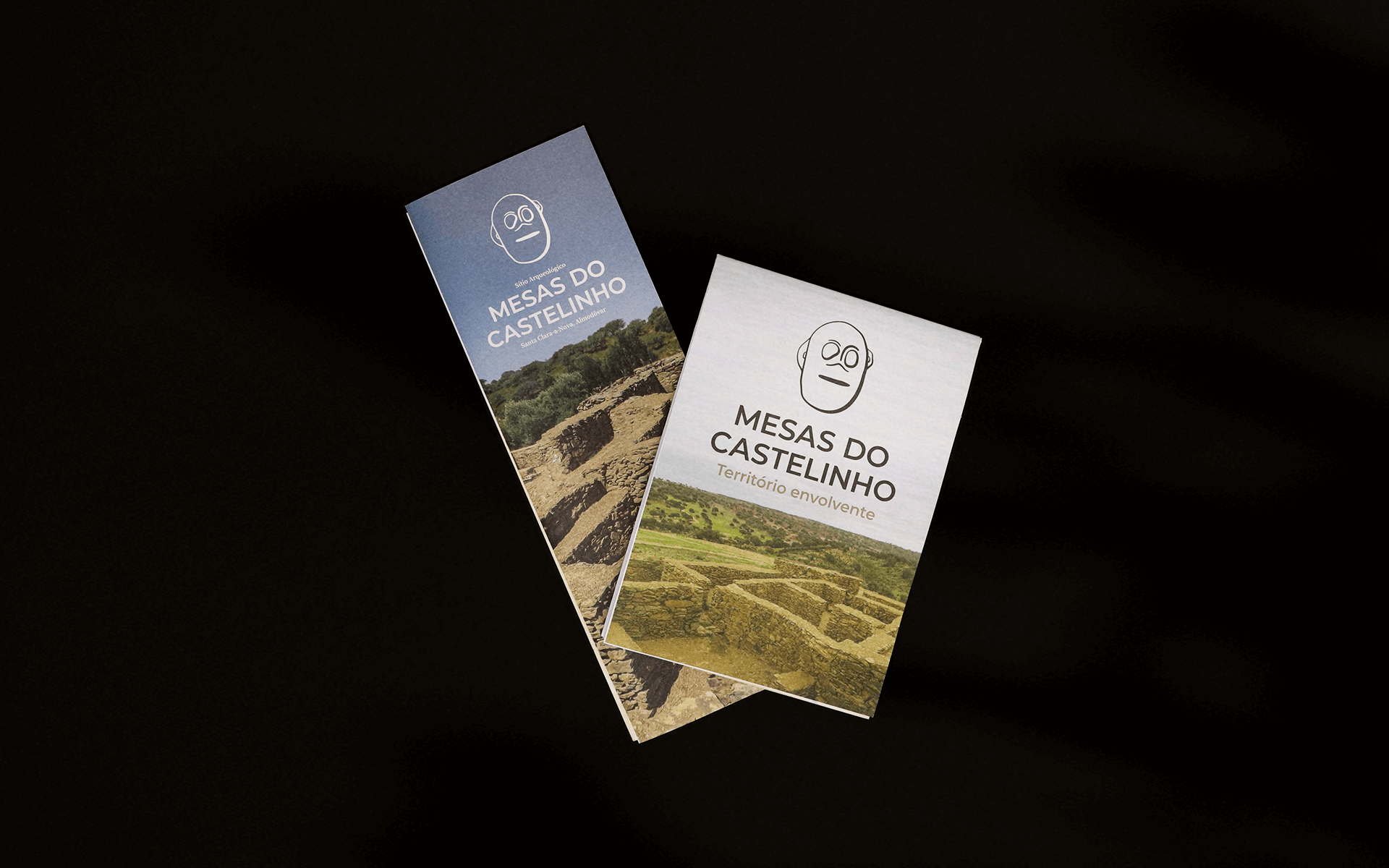
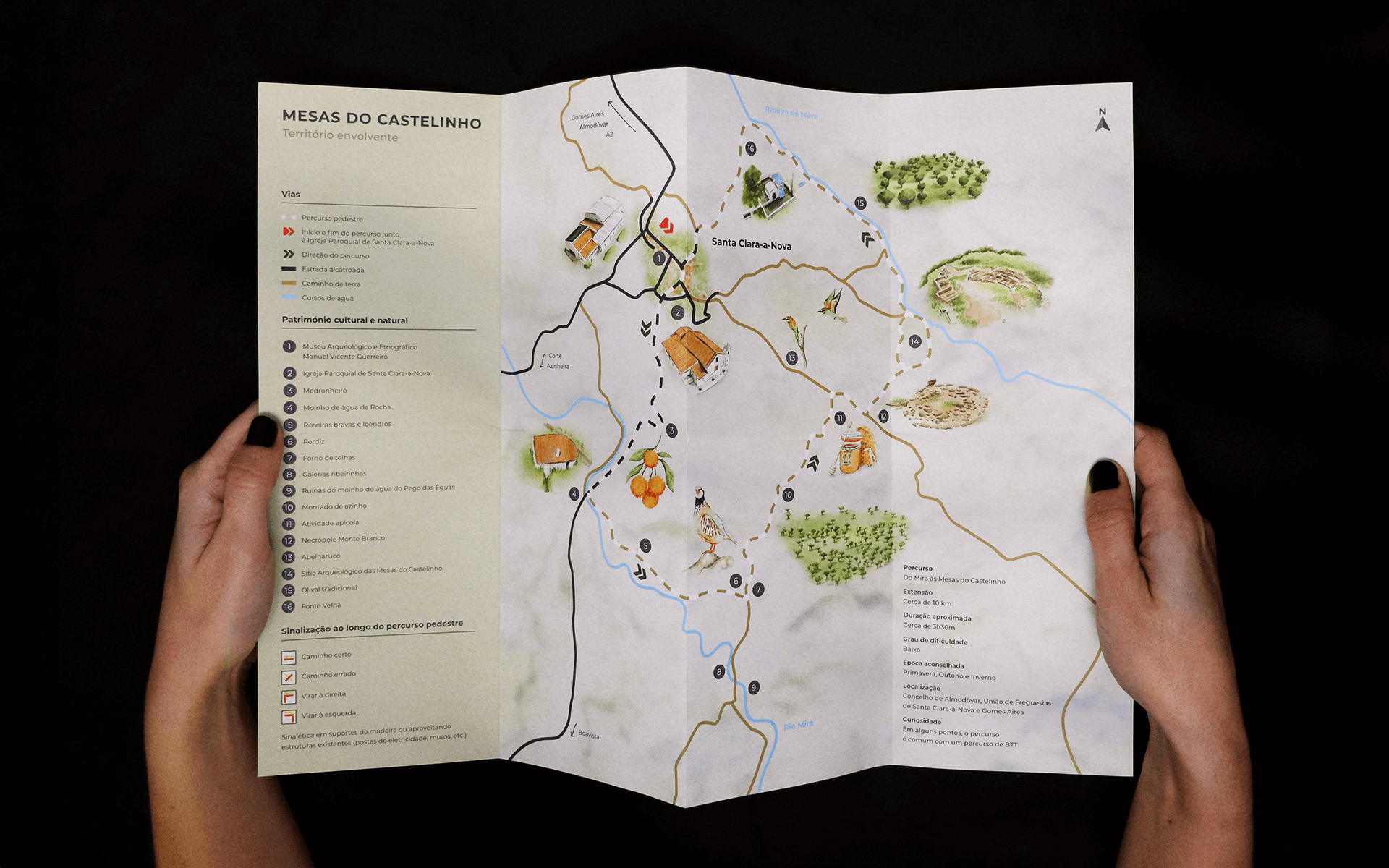
From the illustrated map to the explanatory foldout, and including an activity booklet for children, each piece was designed modularly and adaptable to different formats. The design emphasises imagery and allows for easy updates, ensuring longevity and dynamism across the set.


– Foldout with illustrated map, “Mesas do Castelinho – Surrounding Territory”.


– Foldout “Mesas do Castelinho”.


– Activity booklet for children.

Merchandising
To extend the visitor experience, we developed a range of promotional products consistent with the visual identity of the site. Pins, magnets, pens, lanyards, and t-shirts were carefully crafted with attention to detail, designed to be useful, durable, and sustainable.

Presentation Video
The story also came to life in audiovisual format. With aerial shots, detailed footage of the archaeological finds, and moments of the mascot in action, we created an engaging video designed for multiple platforms, from the physical site to social media and the municipal website.
the result
The project gave Mesas do Castelinho a new voice, clearer, more engaging, and closer to the audience.
Among the most visible impacts are:
Bringing the community closer to heritage: with particular emphasis on children’s participation in creating the mascot, strengthening the sense of belonging.
Greater accessibility and historical understanding: thanks to the new signage, informative content, and integrated visual approach.
A richer and more complete visitor experience: combining information, discovery, and fun, without compromising scientific accuracy.
Enhancement and promotion of the territory: both as a tourist and educational destination, positioning Almodôvar as a benchmark in preserving and activating its heritage.
This project is proof that communication, when carried out with purpose, closeness, and sensitivity, can transform an archaeological site into a living space, connecting past, present, and future through the people who visit it and the stories that endure there.