
the challenge
The mission was twofold:
–
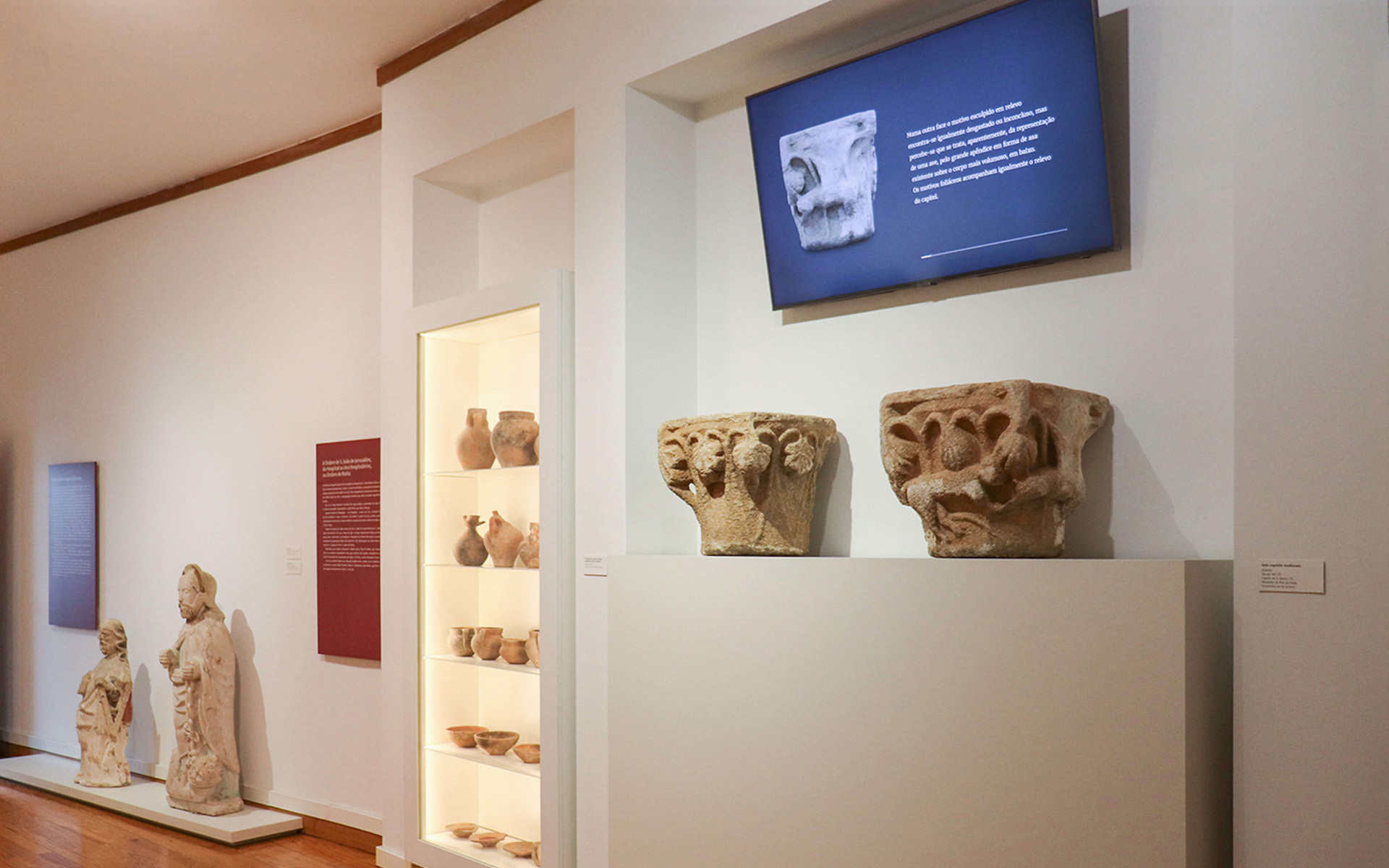
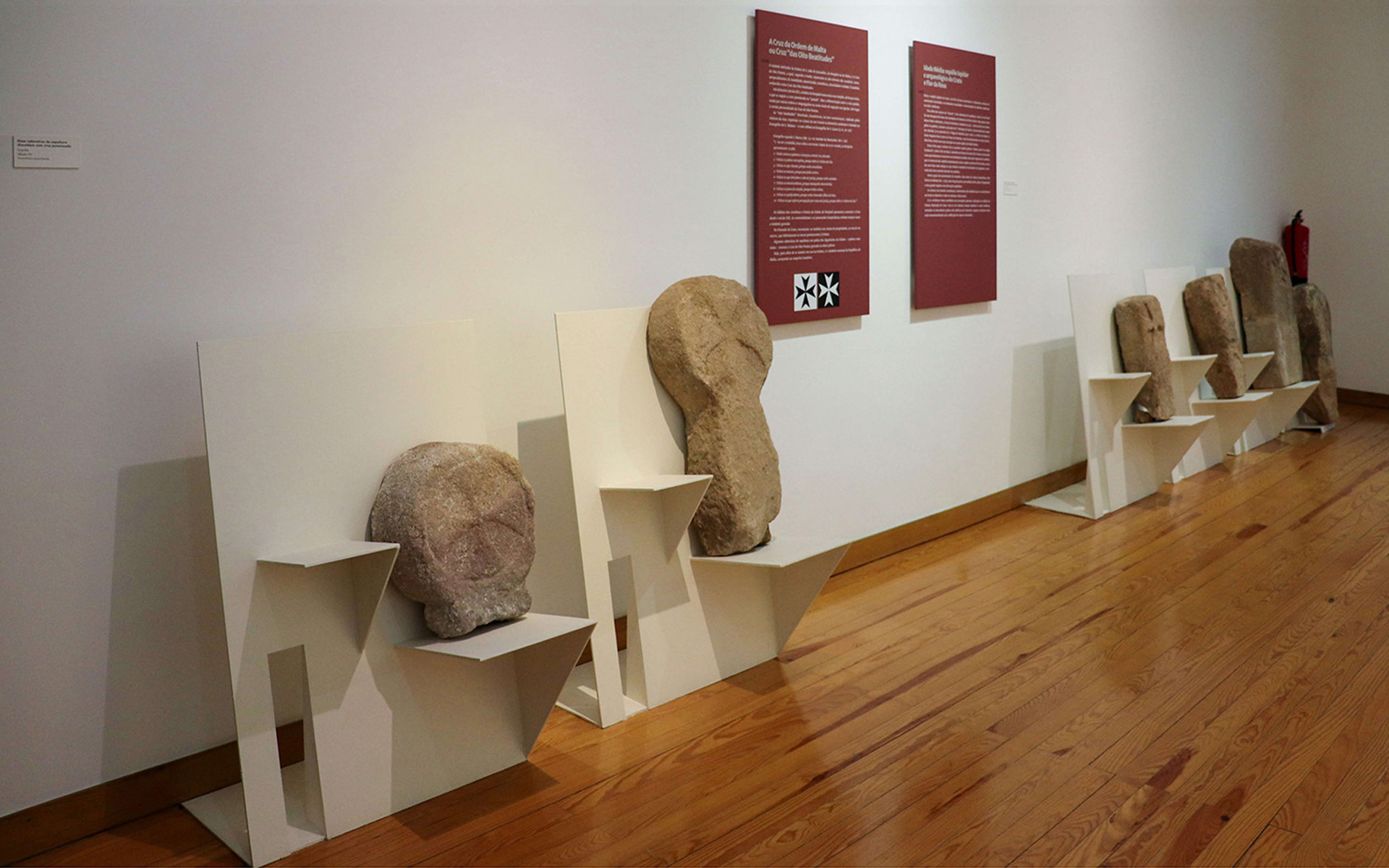
To create engaging multimedia content to contextualise the granite capitals on display.
–
Imposing pieces, yet complex for the average visitor to interpret; and to make accessible a 1620 book that cannot be physically handled, through a realistic and intuitive digital experience.
The challenge lay in balancing the educational and interactive components while respecting the integrity of the artefacts, the aesthetics of the space, and the diverse visitor profiles.
The solution had to be simultaneously technological, functional, and sensitive to the museum context.
the process
360° Capitals: between detail and narrative
The museum team captured high-definition images of the capitals, recording every angle and texture. UTD processed and animated these images, creating an immersive video with 360° simulation, where every detail is brought to life.
The content combines movement with historical explanation, allowing visitors to understand the form, function, and significance of the pieces, and to explore them in their own time, at their own pace.


– 2 granite capitals.
Interactive Book: When technology brings back the sense of touch
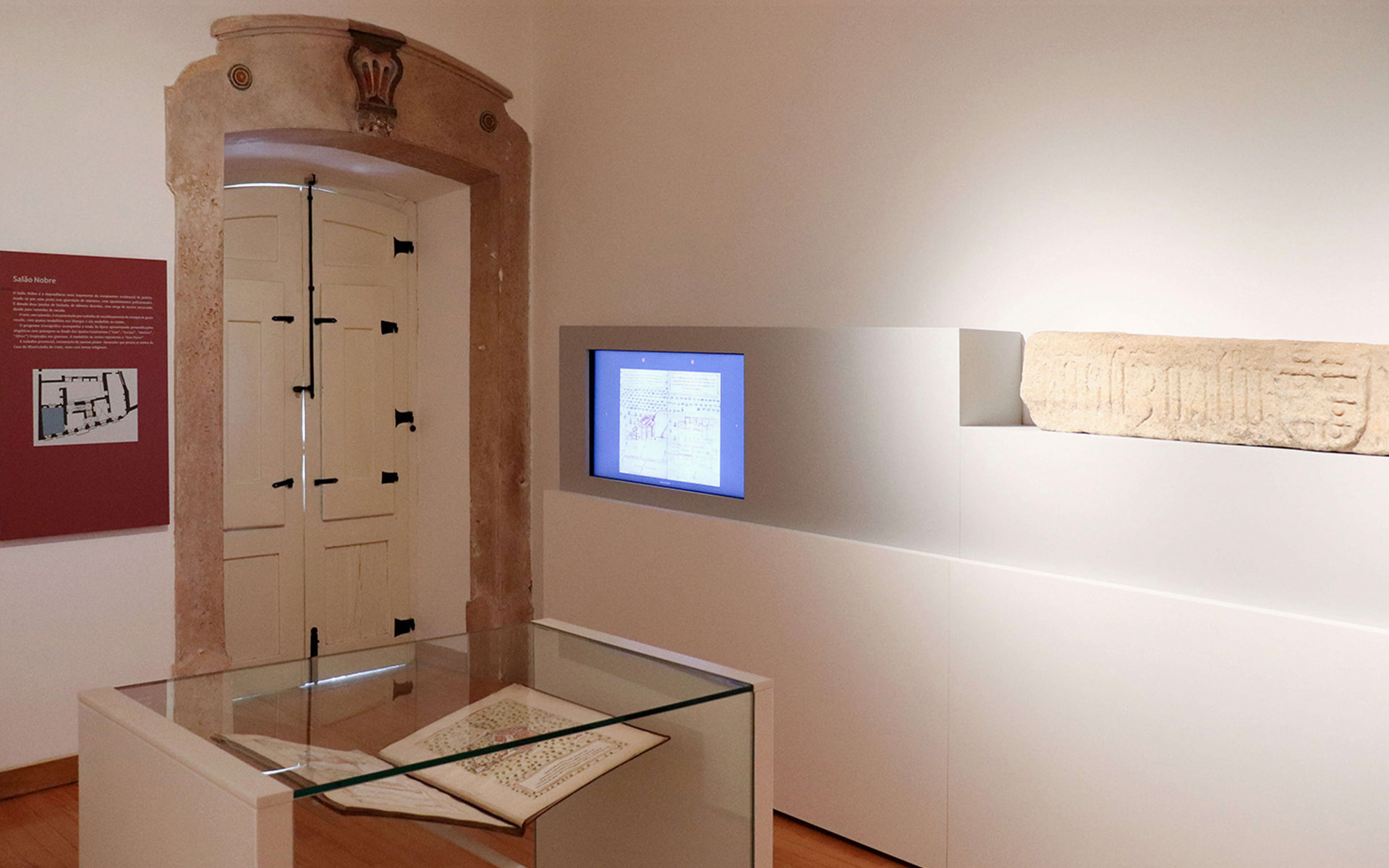
The book “Plantas e Perfis das Igrejas do Priorado do Crato“, authored by the royal architect Pedro Nunes Tinoco (c. 1580–1640), is a rare work and far too fragile to be handled or leafed through.
The solution involved high-quality digitisation of its pages, followed by the creation of an interactive animation that simulates turning the pages of the book.
With a simple swipe of the finger, visitors can digitally flip through the book in either direction, in a smooth and realistic way. Each page features icons with additional information that enrich the reading experience and make it more educational.
The interface was designed to be intuitive, even for users who are less familiar with technology.


– Photographs of scanned pages from the book, with interactive animation that simulates turning a page.

– Graphic composition of the video (detail of a page about the Mother Church of Crato).
the result
The museum has gained a new layer of interpretation and engagement:
The video of the capitals helps to contextualise the pieces visually and historically, making them more accessible to all audiences.
The interactive book allows visitors to freely explore a work of enormous historical value without compromising its preservation.
The museum experience has become more dynamic, without losing respect for memory and historical accuracy.
This project shows how multimedia design, when applied with sensitivity and intention, can bring the public closer to heritage and transform a visit to the museum into a moment of discovery that remains in the memory.